Reflections on the 25th Anniversary of 9/11
[Facebook Post Originally Shared on September 12th at 1:26 PM — Japan Standard Time]
I'm probably in the very last set of individuals who have any possible memory of 9/11, though it is extremely fragmented. I was five years old, and I certainly did not understand the significance, even if I recall the images. What I remember most, on that day, in the weeks following, even in the whole next couple of years, was the struggle and incapability adults had when it came to conveying or explaining to me what exactly happened or why. I picked up on that awkwardness, always finding it strange, wondering how bad it must've been if no one really wanted to tell me the details. My kindergarten teacher, Mrs. Matayoshi, handled it delicately, so much so that I have much stronger memories of various frivolous activities in that classroom than of the actual time we spoke about 9/11.
If the goal had been to shield my innocence, I suppose it worked, because I definitely saw footage of those planes flying into those towers, but I wasn't afraid. At the same time, I remember the first time I ever thought about death in an existential sense of finality and felt really scared about it was at age 4 — that's a lucid recollection of mine, so maybe I didn't have much innocence to begin with.

I also lived in Honolulu; to be honest with you, we weren't that concerned over there, from a fear standpoint. New York felt like another side of the world. Hawai'i felt safe. With the time difference, both towers were gone long before any of us had woken up. Schools weren't even cancelled, except on the Big Island and a few private ones. When our day started, it was already over.
O'ahu was my entire universe, the only thing I knew concretely. We're an island in the middle of the Pacific, and yes, even with the precedent of Pearl Harbor and massive strategic military importance, we generally just don't think of ourselves as a target on a daily basis, outside of that accidental 2018 ballistic missile alert. I think we're far more concerned about earthquakes, tsunamis, and storms.
In the days after 9/11, people came together; the American flag was unifying (and everywhere in 2001/2002) — there was community. But in the years after 9/11, my childhood occurred in something vastly different from that. On a societal level, people drifted apart, embraced insularity — the transition from analog to digital (most intense circa 1999 to 2005) accelerated this and I lived it; half of my childhood was still very, very analog. Half was not.

Americans did not view people in the Middle East, in many parts of the world, as equal, of any worth, of any humanity whatsoever. The American flag was becoming a stain. It legitimately was what Green Day referred to as the Age of Paranoia, and I saw firsthand the great danger and toxicity of this paranoia and extreme patriotism during my most formative years.
I remember seeing several disturbing visuals when I was young; i.e. being about 7 years old, watching buildings explode in Iraq and bloodied people on the news. War and suffering was once something everyone had to endure firsthand. With television, computers, and distance, we could witness the US destruction machine indiscriminately kill so many innocents with a sense of passivity and dissociation.
9/11, for me, was yet another disturbing face in an ever-expanding crowd. Violence in a world of violence. America had been attacked. Now, America was doing the attacking. An eye for an eye often is our instinctual default. Growing up in the 2000s, it was just the reality that we all felt inside of us: this is the age in which America blows things up and there are no more rules. We coped and normalized in our own ways as youngsters.
9/11 is a very complex thing, and it has changed all of our lives, the entire course of history, in one way or another. It's important to think about all of the varying consequences and changes that were prompted.

1. The deaths of each innocent person that day and the eternal wound it left upon their loved ones, mostly American citizens, but also those from India, the UK, Canada, Japan, and elsewhere.
2. The suffering of survivors and first responders, who came together, who rushed to help their fellow human beings, risking their safety and their health without a moment's hesitation. Thousands of them have died in the years since.
3. The American response to this tragedy, via the various arms of the Global War on Terror, which have disproportionately led to the annihilation of millions of innocent people abroad over the last 25 years.
4. The US military personnel, many of whom were actually infants or yet unborn on 9/11, who have carried that burden of conflict and been killed in duty, or come home with visible and invisible scars to a country that often doesn't know how to take care of its own.
5. The international security and surveillance framework, which has tightened so severely this century. In the effort to prevent another 9/11, many of our freedoms have been sacrificed, our privacy essentially doesn't exist anymore, and the technological advancements, especially with AI, are reaching points of no return.

I wish 9/11 could be a simple remembrance, and it certainly can be, to an extent. All of the people in the World Trade Center that day deserve to be honored, never forgotten. National Geographic has a miniseries — 9/11: One Day in America — which is actually traumatizing and unflinching. It'll really leave you in tears and give you an important understanding of how truly awful that morning was, in great detail.
At the same time, 9/11 is not a simple memory. Not at all. It remains the single most transformative moment of the 21st century thus far. It has led to so many worldwide shifts, conflicts, changes in policy, in ideology.
It's a double tragedy; firstly, in the obvious sense. The civilians that day. The pain of their loss. The horror. Secondly, in the aftermath. Yes, initially, a lot of people came together. New Yorkers came together, and I think the New Yorkers are still together. But for America as a whole, over time, the trajectory shifted. Politicians took advantage of our vulnerability. Pundits stoked resentments and prejudices.
We had an opportunity, an extremely rare opportunity, to not let our inner demons get the best of us at our lowest point. We had a chance to take that anger, that grief, that emptiness, and rise above it. We could've shown the world how we meet darkness with light.
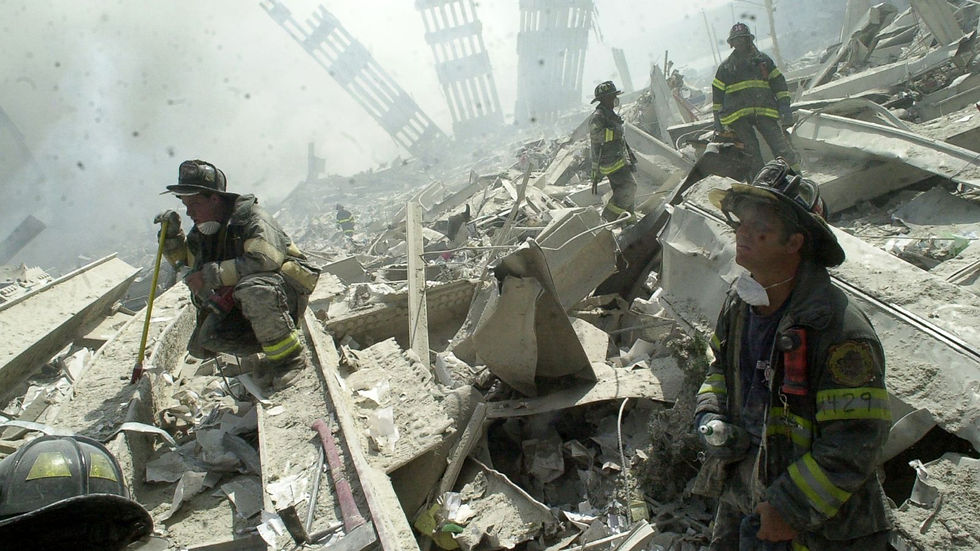
The firefighters did that. The people clamoring down the stairwells in a panic, who still made time to carry the injured, to comfort each other, did that. Everyone bearing witness, who hugged a stranger or called a loved one, did that.
Our country has not followed their example. Instead, we have followed the selfish path, the path of a dirty ideal Donald Trump himself wished for in an interview 25 years ago: retribution.
I also remember the day Osama bin Laden was killed; the footage of large crowds finding out it happened and eerily chanting U-S-A! U-S-A! like giddy kids. I understand there is an emotional reaction when someone who caused so much harm is eliminated, and I don't think it's necessarily wrong to feel catharsis or even joy when bad people die. But is that really what we're about? Is that really the big point of pride, the lesson we take from all of this? That we hunt and extrajudicially kill those who do terrible things to us, we scorch the four corners of the Earth along the way, and then we dance around? I don't know. Vengeance at all costs is foundational terrorist behavior, if you ask me.
I think 9/11 was a crack in the American Dream, and no one ever properly filled or corrected it. It has grown and grown and grown, compounded by stress fractures, all the way until the breaking point we seem to be reaching now.

You leave America, and you see a world that is far more peaceful and compassionate than Fox Fiction or CNN would have you believe. You see, in spite of varying cultures, individuals at every reach of the globe are essentially exactly the same as you. You see that the American Dream is alive and well, it's just not in America, and it's not American. Everyone has dreams. Everyone hopes for an adequate life, a better life.
Americans believe the universe revolves around them, though they understand very little of what occurs outside of (and within) their borders. My wish for the future is that America might stop trying to teach and dictate to the world from its mythical cloud of singular exceptionalism. There is a way out of our many issues, though it involves humility. We are not teachers. We are students. America must learn, earnestly, from others. America must realize it is just one piece of an exceptional world.
On Tuesday, September 11th, 2001, as various people suffocating in the towers on the highest floors after impact understood they were going to die, many of them did something both heartbreaking and beautiful. They called the people they cared about. They left voicemails.
What did they say in those calls and voicemails?
Kill the terrorists? God bless America? Avenge me? Hate your neighbor? Go to war? I think it was the Muslims?
No.
Take care of the children. Remember me. I will always be with you. I'm scared. I don't know what's going to happen. I love you.

Nothing about 9/11 makes me more emotional than hearing those voicemails, those final words people said, and I truly view them as the most important message of the day.
These individuals, who were attacked, who perhaps didn't even know they were attacked, did not conceive of hatred or ill will in their dying breath. They weren't contemplating the policy ramifications or whether or not they were part of a global geopolitical shift.
Some of them were at peace. Some of them were frightened. All of them just wanted to go home, and they just wanted to see their loved ones again.
They left this world with tenderness in their hearts, and it is that tenderness with which those of us who remain should forever walk beside.
Comments